Wishlist on Steam
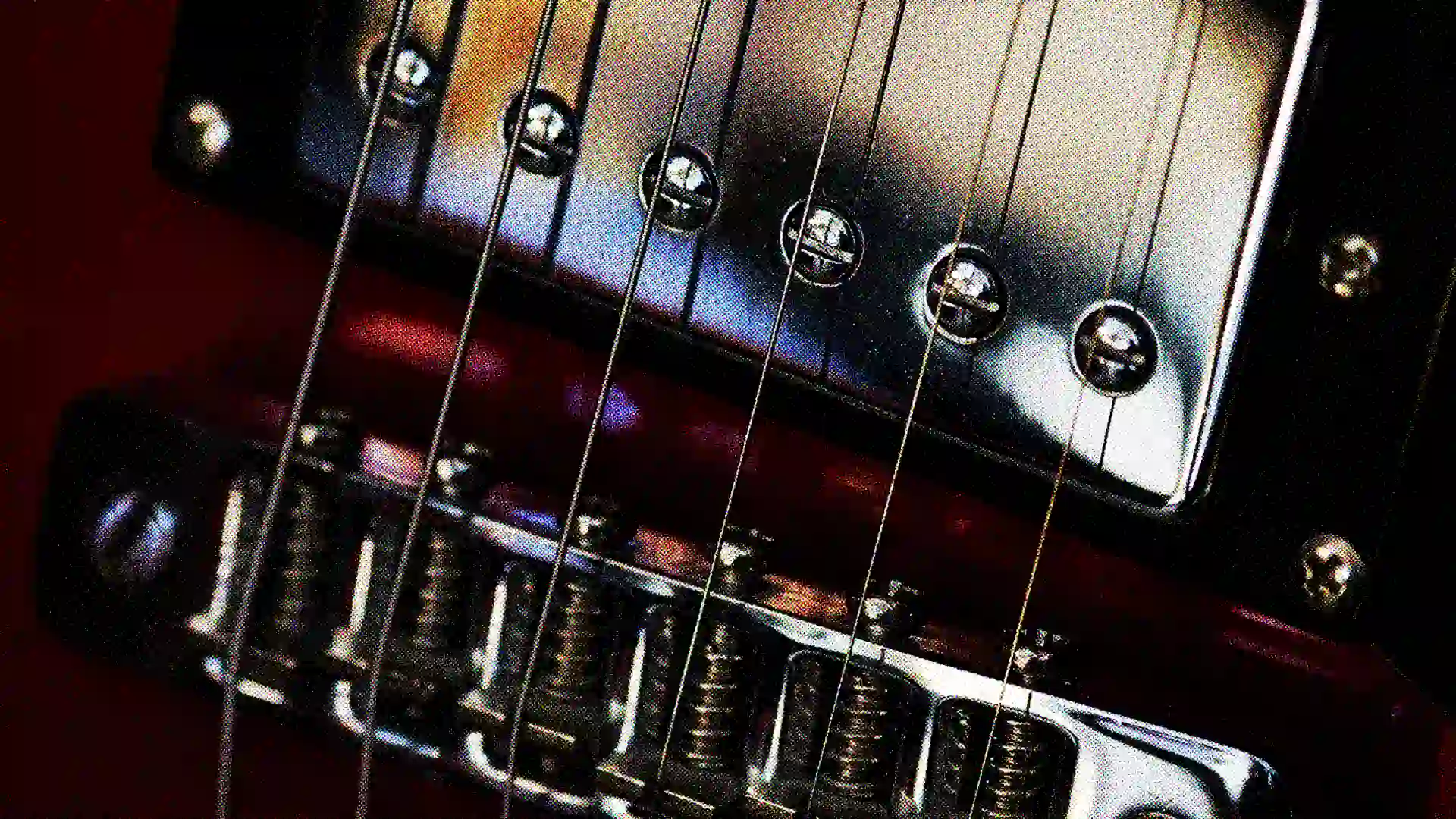
A string can remain intact yet become hard to tune. A bass set that has lost its initial sparkle may be getting closer to the sound its player wants. We look at what counts as wear and which problems a new set can solve.
In 1982, researcher Adrianus Houtsma tried to speed up the aging of a wound guitar string: he tuned it up a fourth, released the tension, and repeated the cycle twenty times. Measurements then showed changes even when the string had not broken. It was a severe treatment, and Houtsma acknowledged the limits of his model. The question behind it is familiar enough at home: what happens to a string before it snaps?
It helps to distinguish three things: a string is damaged, its vibration has changed, or its sound no longer suits you. They can happen together, but call for different decisions. Start with the string itself. There is more going on there than a calendar reminder can tell you.Image credits and licenses
As the surface changes, the sound follows
A thick metal string usually has a core with another wire wound around it. The core carries the load; the winding adds mass, allowing a low note without a single, thick solid wire. Gaps remain between the turns. Dirt can collect there, and metal surfaces come into contact with sweat. A plain steel string and a wound string therefore face somewhat different conditions.
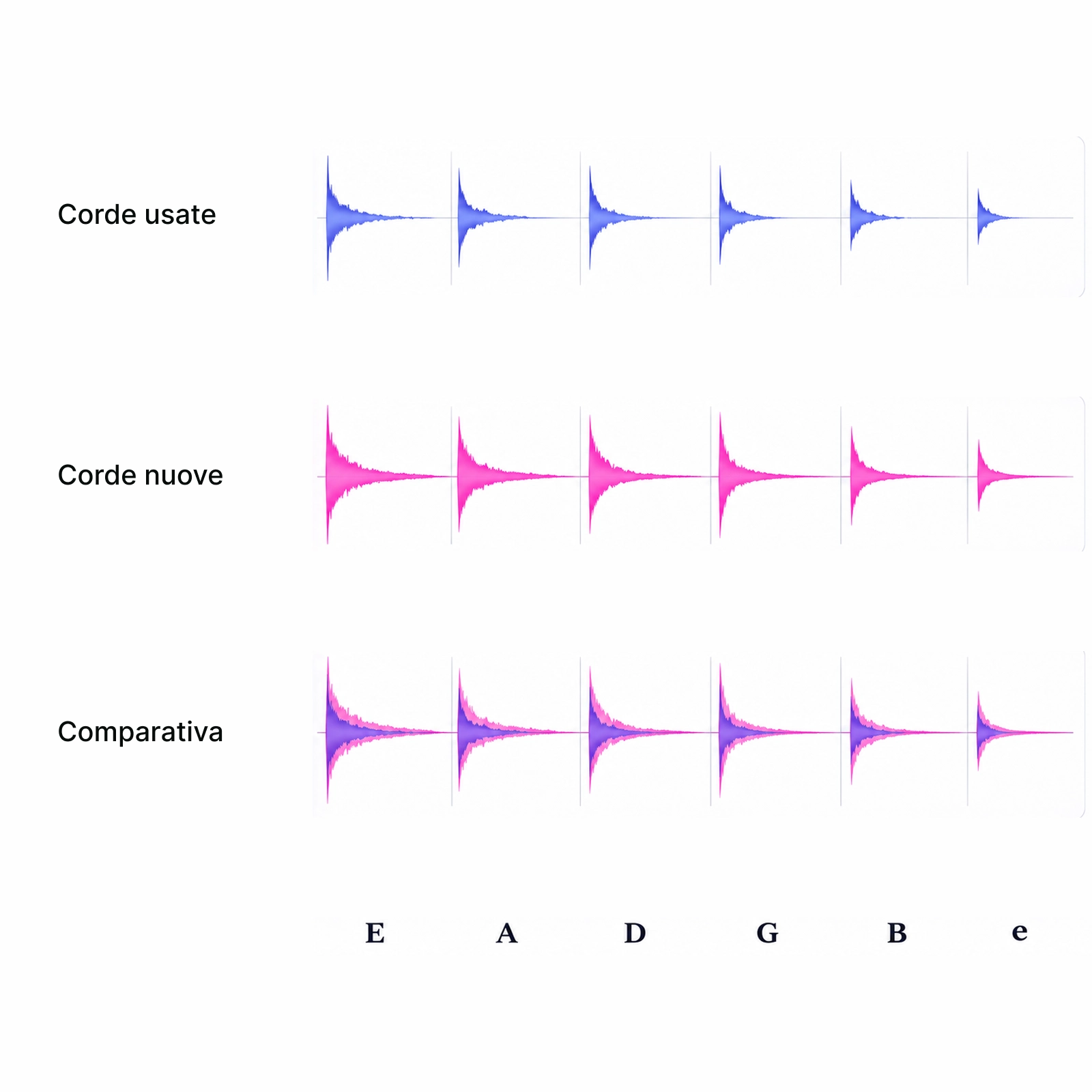
Sweat matters here as a chemical environment. In a study published by López and colleagues in 2015, the condition of a steel guitar string exposed to artificial sweat was compared with acoustic measurements. As controlled corrosion progressed, higher-frequency components weakened and the sound died away sooner. In that case, a string losing its brightness involved a measurable change in vibration. Laboratory exposure cannot be converted into months of rehearsals, though: the study explains a process, not the replacement interval for every set on the shelf.
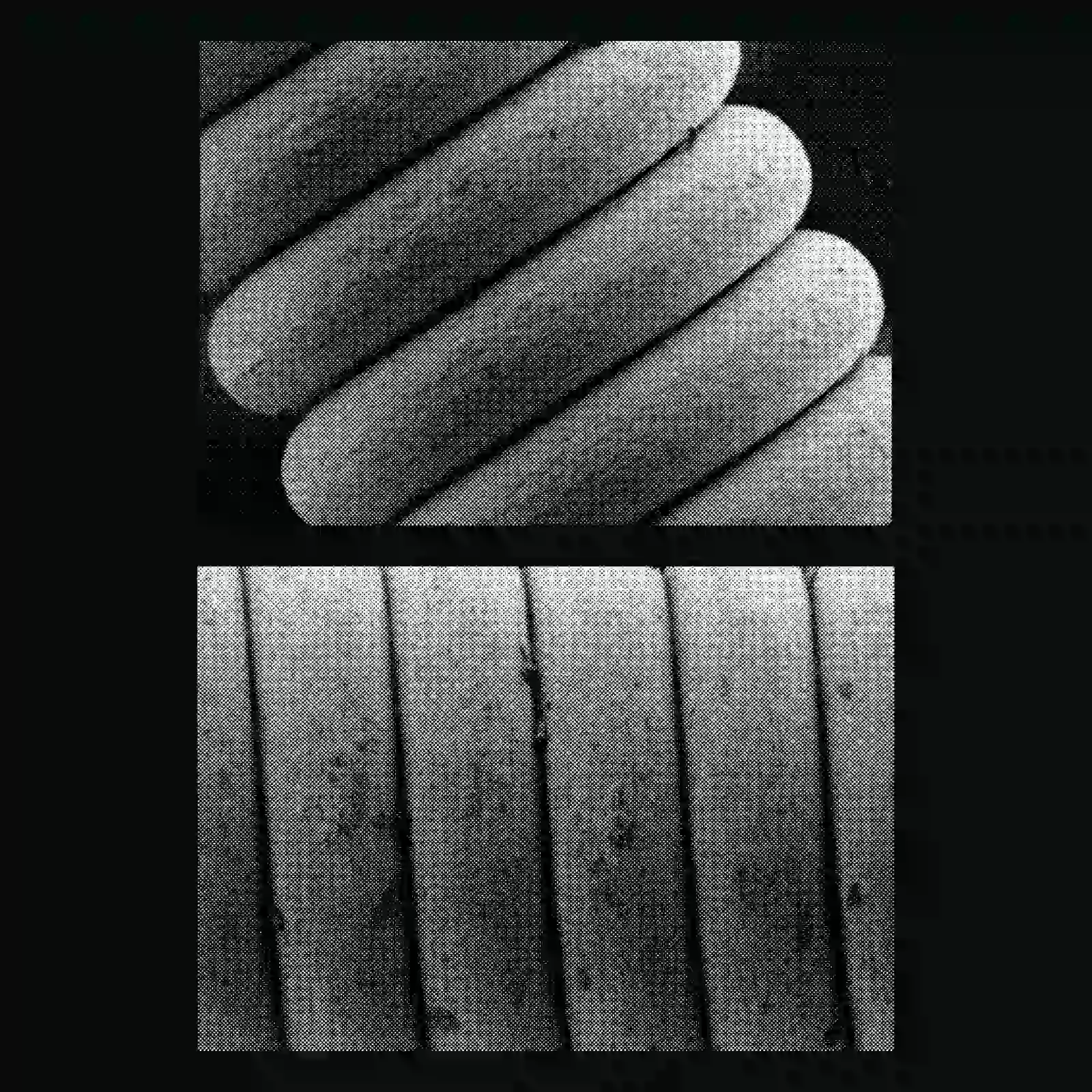
These pictures answer different questions. Unraveled winding is visible in an ordinary inspection; a micrograph shows how researchers examine the surface. A gray patch in a scientific image is not enough to diagnose your own strings. Broken winding and protruding wire leave less room for taste: replace the damaged string, and do not run a finger over sharp areas to inspect them.
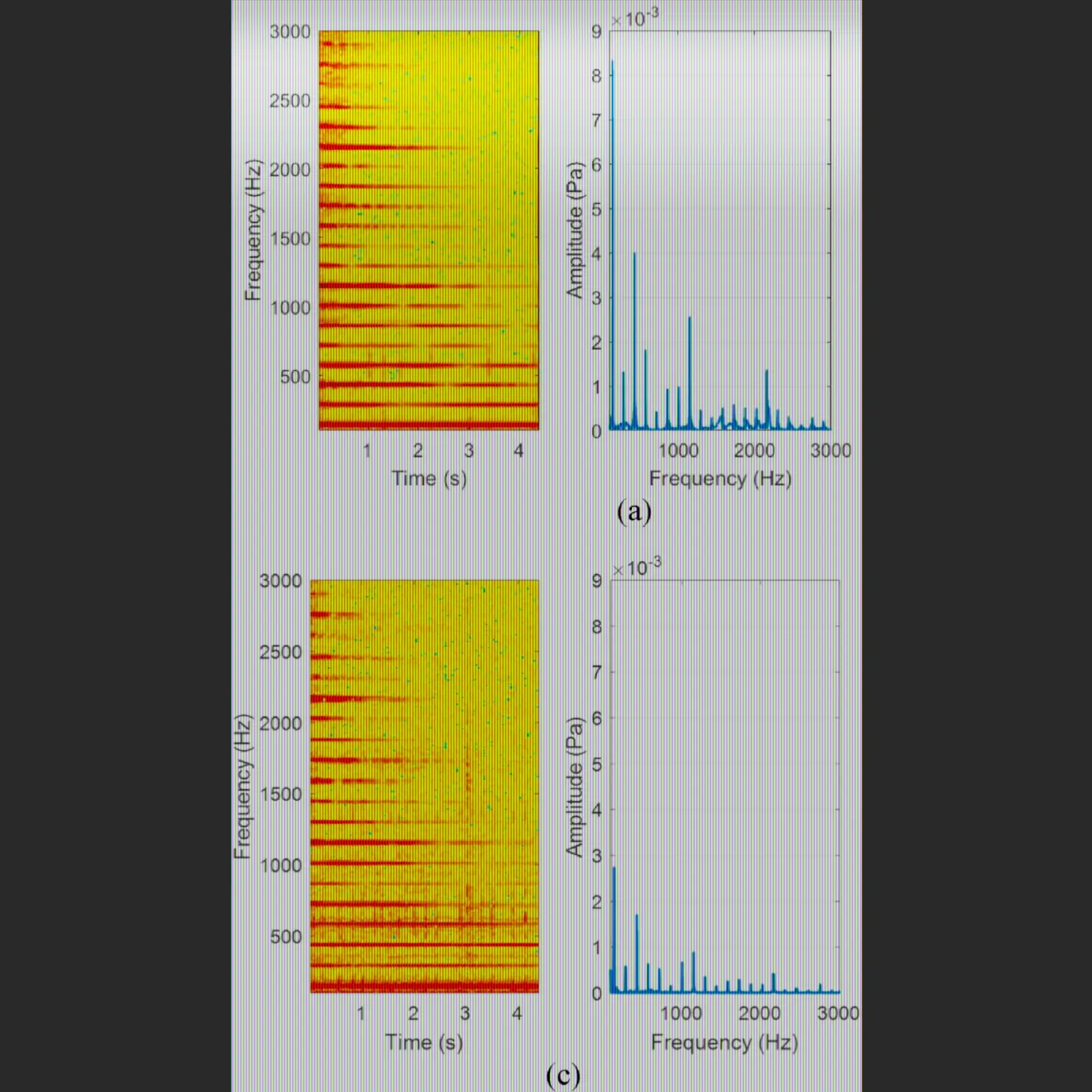
The cathodic protection in this paper is an experimental electrochemical system. It is not equivalent to a NANOWEB or XS coating. Its results cannot identify a winner among commercial string sets.
A string can become troublesome before it breaks
Return to Houtsma’s experiment. Before and after repeated stretching, he compared the frequencies of the first ten partials in the sound. The raised tuning brought the string close to its breaking point; this is not a procedure to repeat when settling in a new set.
After stretching, the partials deviated further from exact multiples of the fundamental frequency. This is inharmonicity. Houtsma attributed the changes to internal stresses and possible movement of the winding that redistributed its mass. His discussion also addressed dirt between the turns and wear from contact with frets. The original paper helps explain why one open-note reading cannot tell the whole story. But spectral inharmonicity and an out-of-tune fretted note are different measurements: a tuner reading alone cannot establish how a string has aged.
When new strings help, and when the guitar needs attention
How often should you change strings?
With regular playing, replacement intervals are often measured in weeks or months, but the instrument and the sound you need both matter. In its steel-string acoustic care guide, Yamaha suggests monthly changes, or even every few weeks, for daily players; for less frequent playing, it suggests every three months if possible. For classical guitar, its guideline is every three months if possible and at least every six months; daily playing may call for more frequent changes.
These are a manufacturer’s recommendations for maintaining the sound, not measured service-life limits for every set. Fender explicitly says there is no fixed rule, advising players to assess wear, corrosion, and the response they want. Use the calendar as a reminder to inspect. Replace damaged strings immediately; with tuning problems, rule out installation and setup first.
Play a familiar phrase and some chords in several positions, using your usual fretting pressure. If the open string tunes correctly but problems persist farther up the neck, do not start moving the saddle at random. Check intonation adjustment, action, installation, and excessive fretting pressure. A suitable fresh set provides a useful comparison; a problem that survives its installation needs a closer look at the instrument.
- A break, protruding wire, damaged winding, or substantial corrosion: replace the damaged string. If the whole set is worn, replacing the set makes sense. Wiping cannot repair physical damage.
- A dirty surface or a loss of the attack you need: if there is no damage, wipe the strings with a soft, dry cloth, tune up, and compare. If the result suits you again, an immediate purchase is optional.
- A new set keeps going out of tune: check the fastening, tuner wraps, and seating of the string ends against the instrument’s instructions. Settling and slipping do not establish that the strings are worn out; synthetic strings also need time to stabilize.
- Repeated breaks at the same point: have a technician inspect the relevant saddle, nut slot, or fret. A stronger core does not remove a sharp edge.
Less brightness can be a musical choice. A bassist may want a restrained attack; a guitarist preparing to record may need a fresh, clear top end. “Until it breaks” and “until the tone no longer works” therefore give different service lives, even on the same guitar.
Six strings do not make every set interchangeable
The label 10–46 gives the diameters of the outer strings in thousandths of an inch: .010 and .046. It leaves the middle strings unspecified, along with the core, winding, and mass per unit length. At the same scale length and pitch, a string with greater mass per unit length needs more tension; outside diameter alone does not determine that mass. Matching the numbers at either end of a set does not guarantee the same feel.
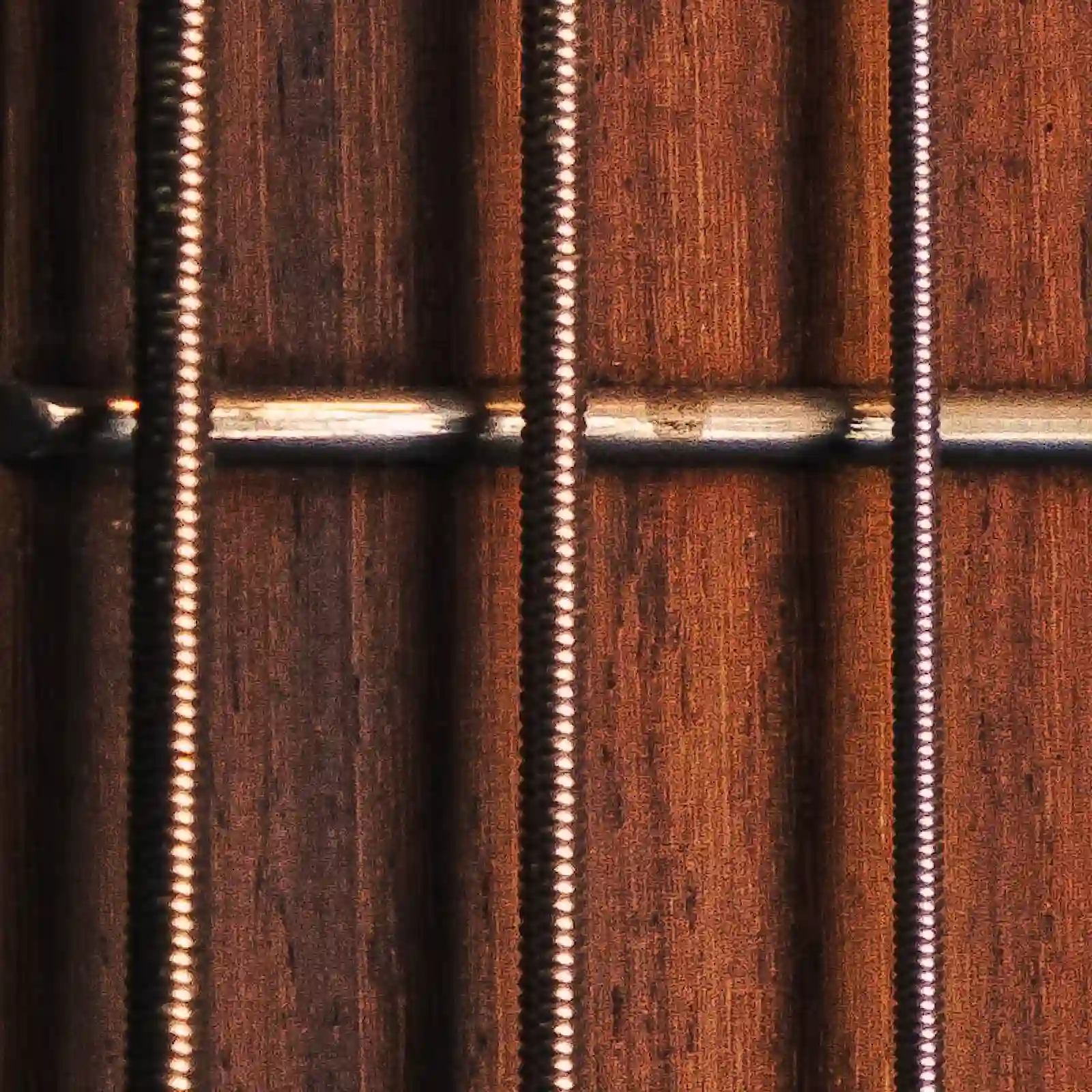
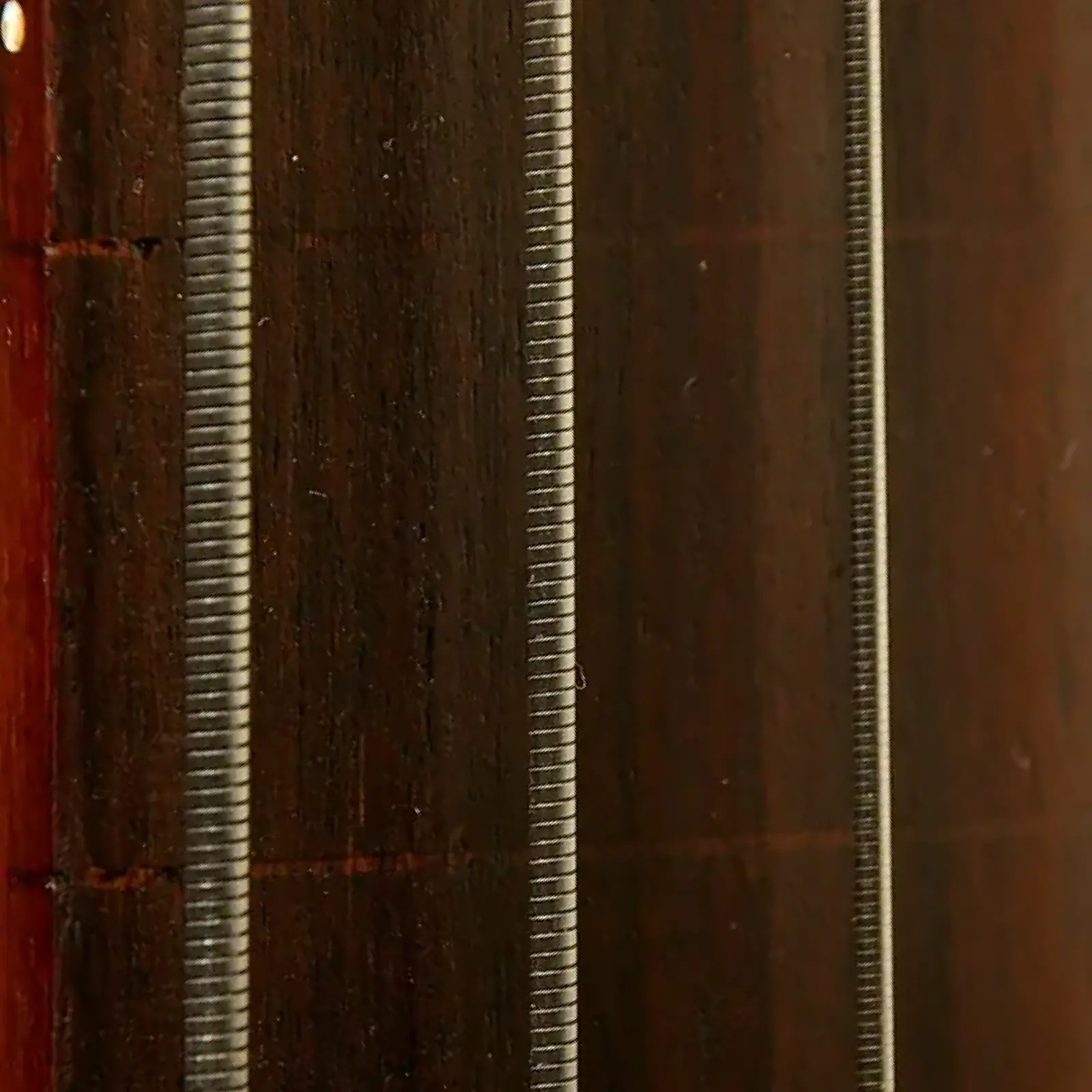
Winding type changes the surface under your fingers. It also relates to the attack, finger noise, and high-frequency character you want. Buying flatwounds solely for their presumed longevity is a gamble: a well-made set can still have entirely the wrong character for your part.
A common starting point for electric guitar is a steel core with nickel-plated steel winding. Steel-string acoustics commonly use bronze winding, including 80/20 bronze and phosphor bronze. These names identify materials, not quality levels. Martin describes its 80/20 strings as very bright, mellowing with use, and its phosphor bronze through more complex high-frequency overtones. Those are the manufacturer’s tonal descriptions, not our blind-test results. A pickup on an acoustic guitar does not by itself make electric guitar strings a suitable replacement.
Classical bass strings have metal in them, too
A classical guitar combines plain synthetic trebles with bass strings that have metal winding over a synthetic core. Shiny bass strings do not identify a steel-string acoustic set. Do not install that type of set on an ordinary classical guitar that is not designed for the load.
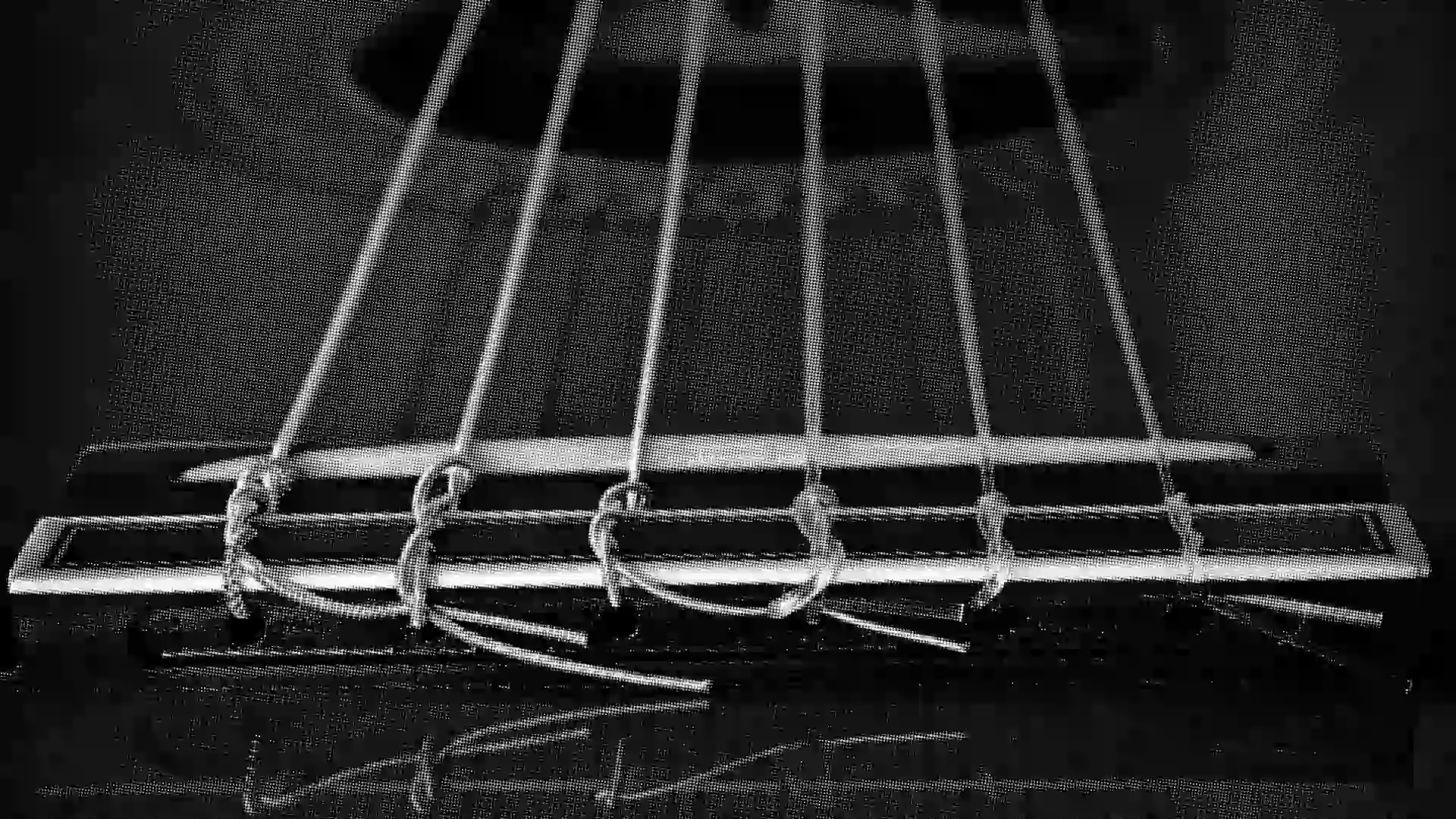

Nylon and fluorocarbon provide different options for the trebles. A more expensive synthetic set may be a purchase for response and feel, with no saving on replacements. Read Normal and High Tension in the context of each manufacturer’s range: the labels are not a universal scale across brands.
The basses in a classical set may need replacing before the trebles. Replacing only the basses can make sense if the other strings are intact, still suit you, and suitable basses are sold separately. Delivery costs and the balance between new basses and older trebles can erase the saving.
A bass string extends beyond its scale length
Scale length measures the vibrating section of a string. Beyond it, the string still has to reach its anchor and tuning post. Through-body installation changes that route; matching Long Scale and 45–105 labels is not enough. La Bella’s fit guide recommends measuring from the ball end to a point just beyond the nut. The silk or taper must start after the nut, and only the intended section should wrap around the tuning post.
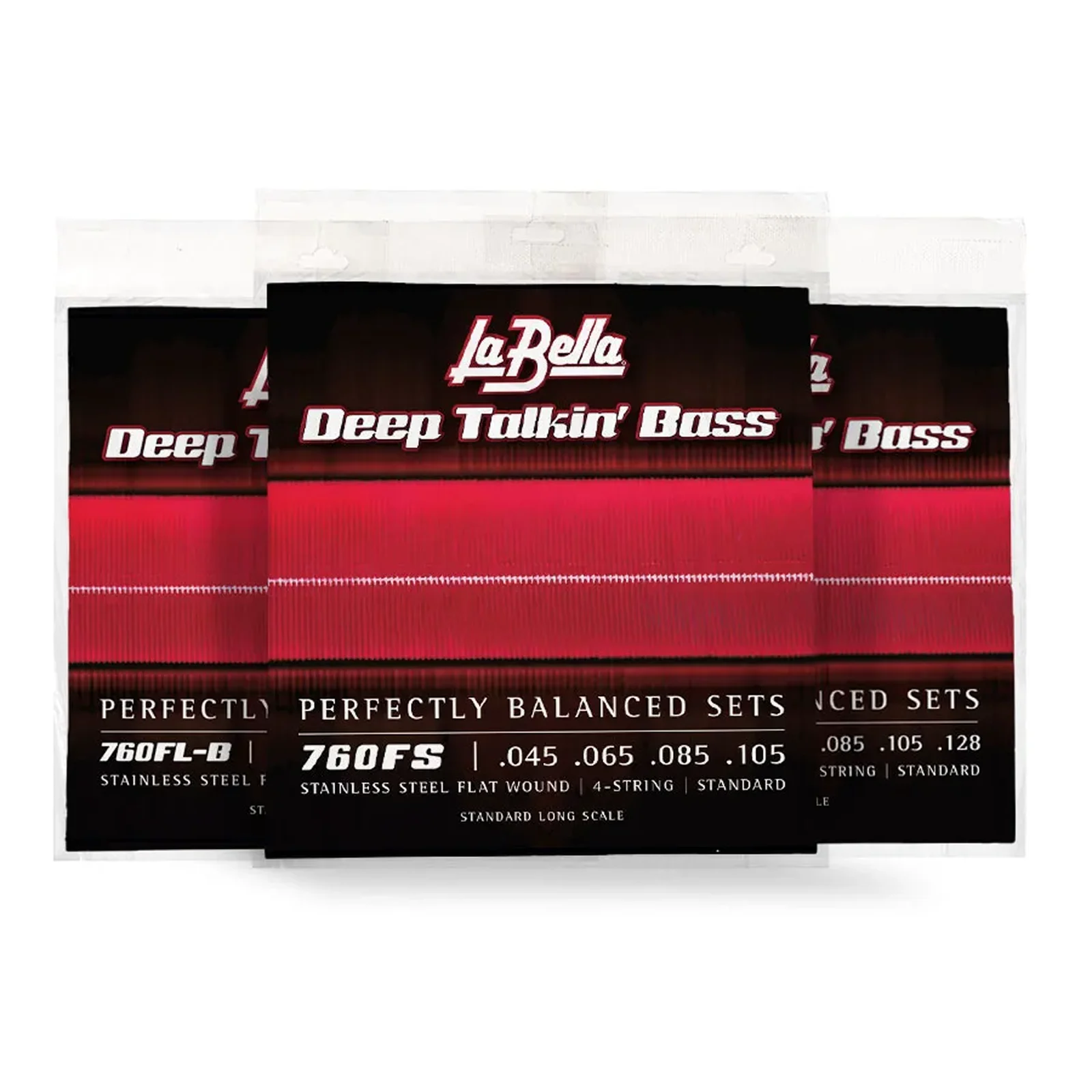
La Bella Deep Talkin’ Bass Flats 760FS-TB, 45–105 is a four-string Standard Long Scale set with stainless steel flat winding. Consider it when you want flatwounds and need through-body installation.
La Bella explicitly excludes this version from top-loading bridges. A matching gauge does not make the ordinary 760FS interchangeable with the TB version. Check the lengths against your instrument before ordering; a hoped-for long service life cannot compensate for the wrong fastening.
This shows a limit of the word “premium”: a set can be exactly what its maker promises and still be wrong for your bass. For a player who likes roundwound attack, switching to flatwounds need not be an improvement either.
Corrosion protection and strength solve different problems
Break strength, tuning stability, and tone life answer different questions: how difficult a string is to break, how well it holds its tuning, and how long its sound remains acceptable. Calling all three “better” makes it hard to know what to pay for. Start with the problem, then consider specific options. The recommendations below use specifications checked on October 31, 2026. We have not conducted comparative tests of these sets and are not ranking prices or availability.
Electric guitar: returning to a familiar feel
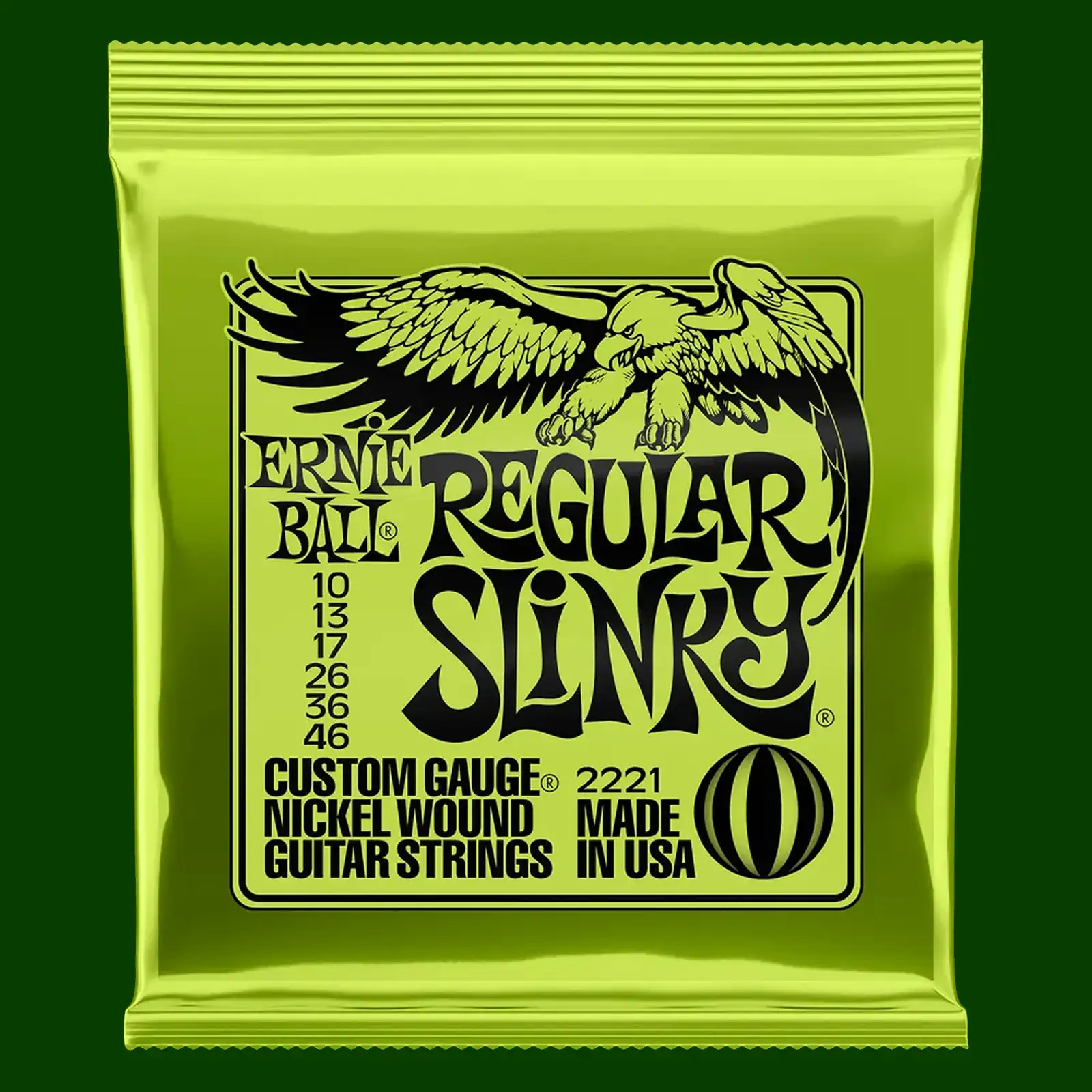
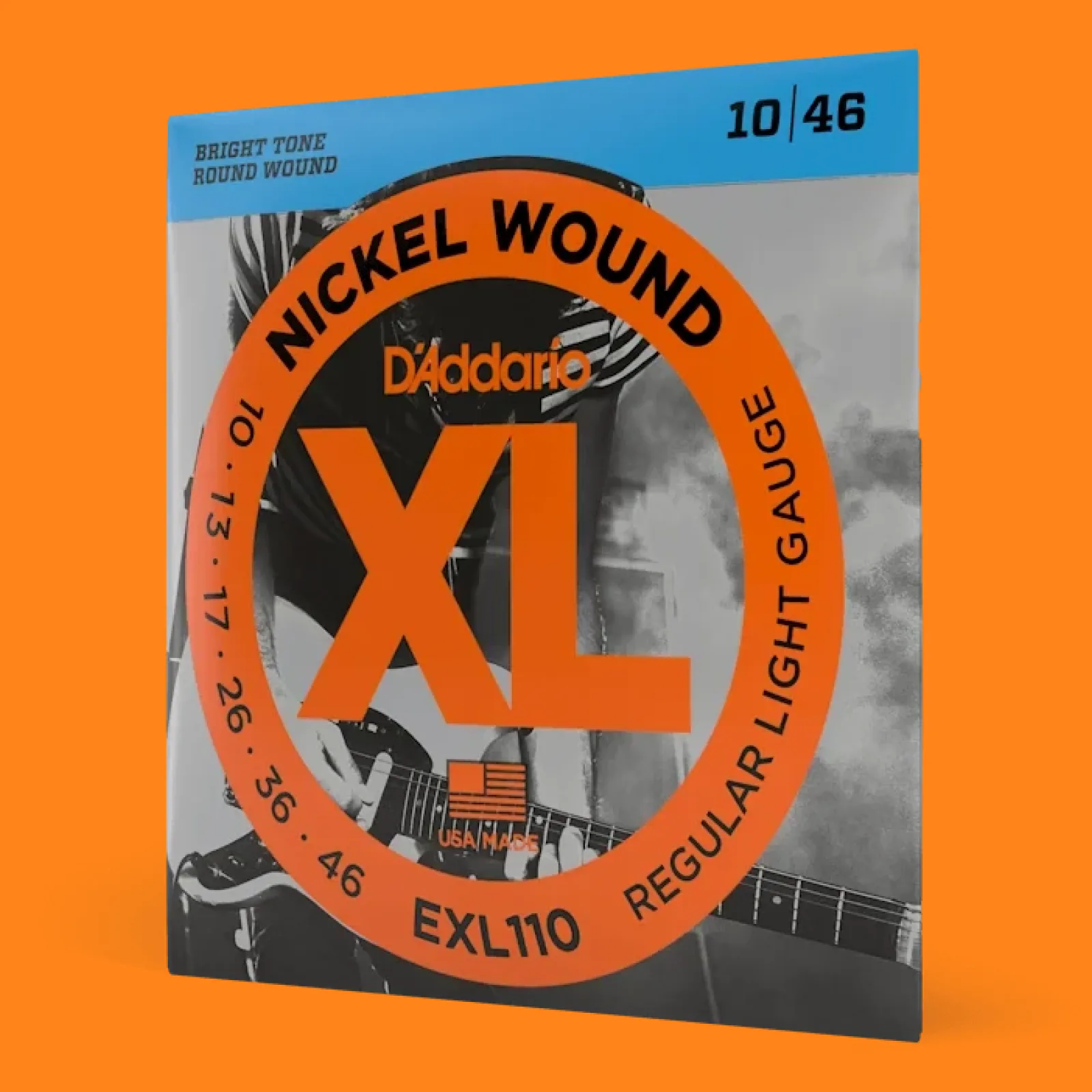
If your usual set remains comfortable and lasts long enough, that is already a good reason to order it again. Moving from 9–42 to 10–46 for the promise of reliability changes the load and the feel of bends; a floating tremolo’s balance also needs attention. A gauge change may require adjustments to neck relief, action, intonation, or nut slots. Changing gauge, alloy, and construction at once makes the result much harder to assess.
Two different reasons to spend more
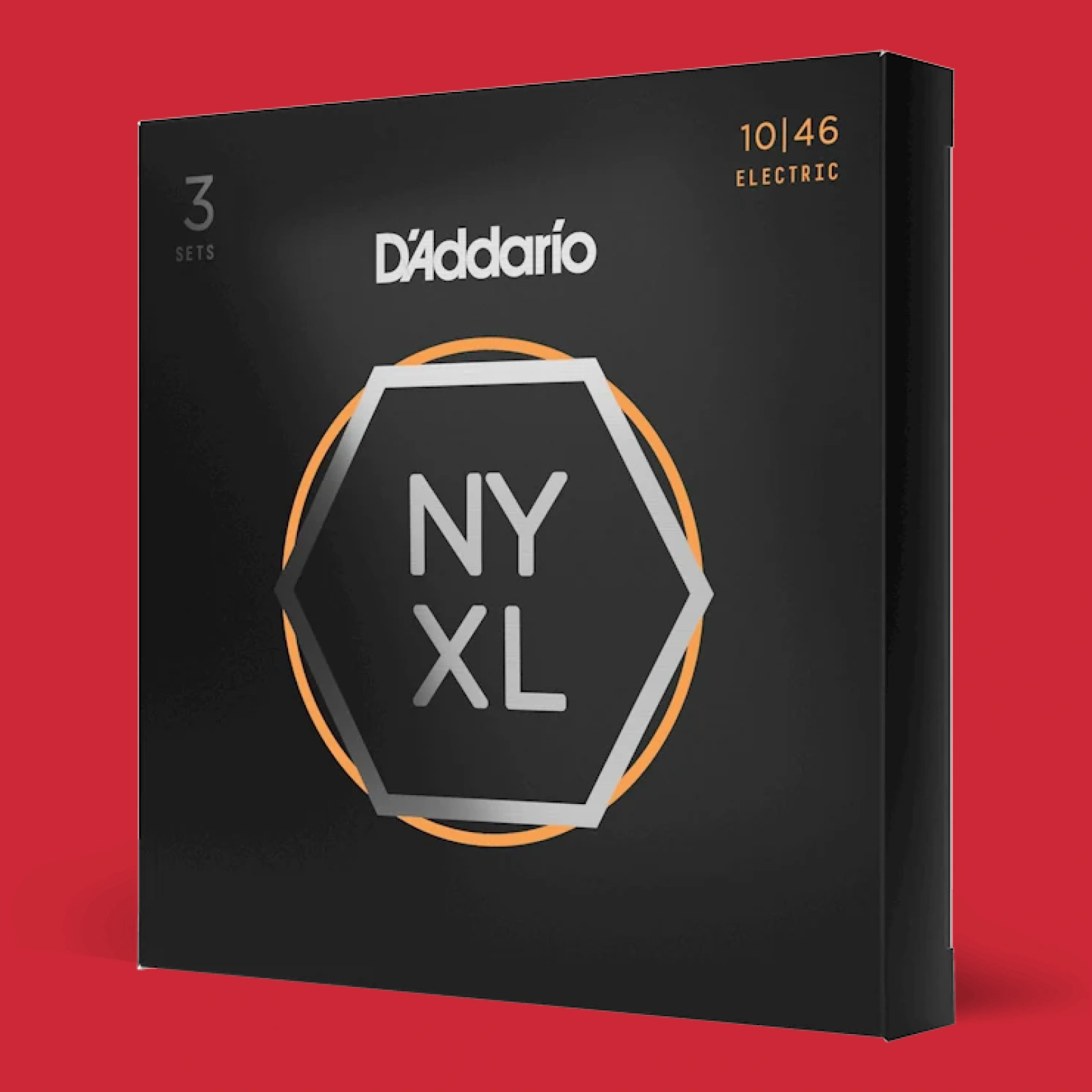
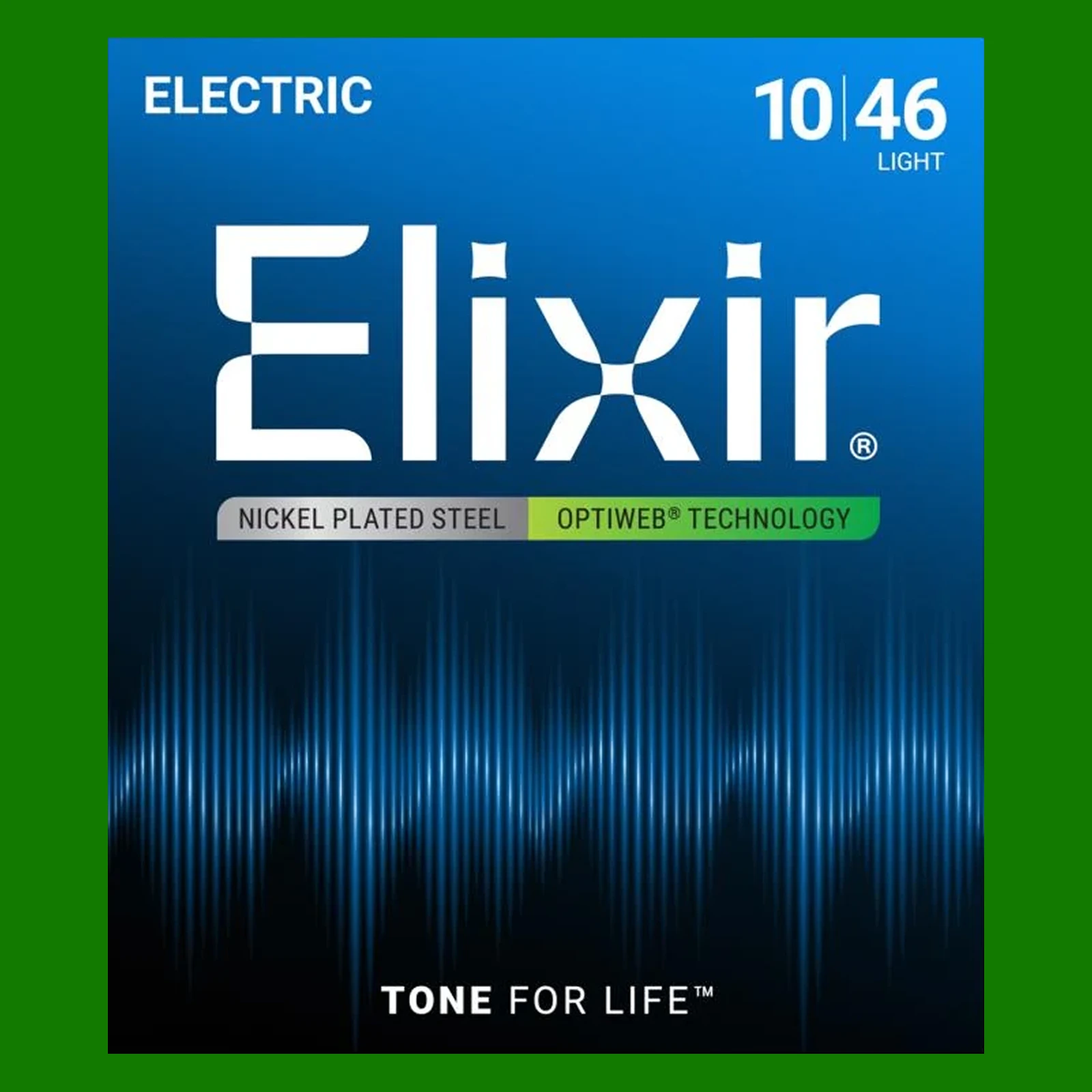
Repeated breaks at a saddle still call for an inspection of that saddle. If the set stays intact but its surface and sound quickly become unsatisfactory, trying a protected series addresses that problem. Service-life claims and your preference for the coating’s feel are separate questions; neither is settled by the label.
Steel-string acoustic: a familiar alloy as a reference

D’Addario EJ16 Phosphor Bronze Light, 12–53 combines a hexagonal steel core with round phosphor-bronze winding.
A useful reference if you like this type of acoustic string and need an ordinary replacement. Special protection is optional if its useful life is long enough for you. This set is not intended for an ordinary classical guitar.
Three options when an ordinary set stops working for you too soon

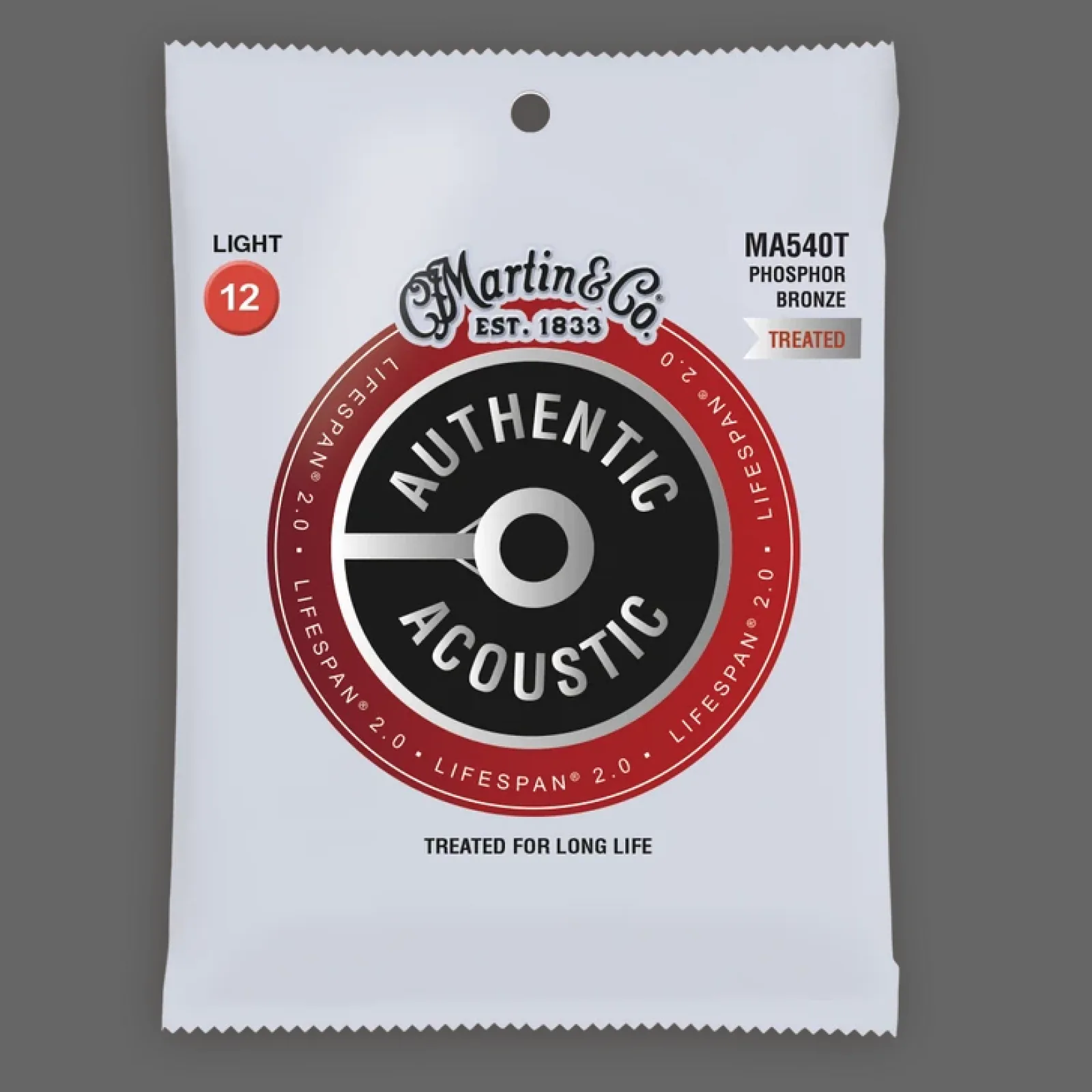
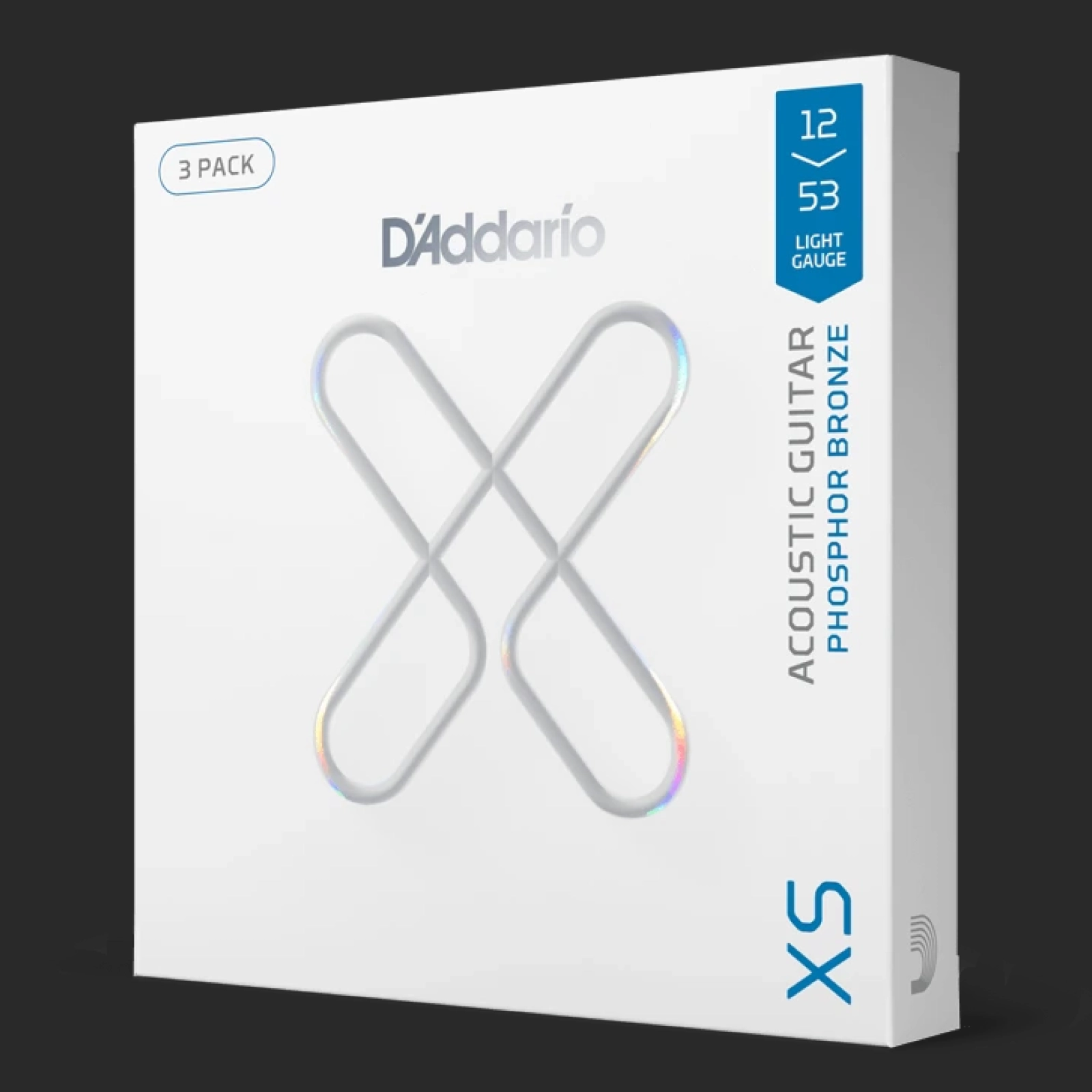
D’Addario XSAPB1253, XS Phosphor Bronze Light, 12–53 offers another option: XS film coating, NY Steel core, and Fusion Twist technology. Matching EJ16’s gauges does not mean identical construction or sound.
The photograph shows the XSAPB1253-3P multipack. Divide its price by three, then add applicable delivery and installation costs per set. When trying unfamiliar strings, a larger box can simply increase the cost of a choice that does not work out.
These series offer different protection methods and specific sets to consider. We do not have sound evidence to name the longest-lasting one. Manufacturer pages may open with a multipack already selected: before buying, check the full SKU, the number of sets, and every string gauge.
Price needs a denominator
Compare an ordinary set with a protected one using the total cost over the time each remains satisfactory to the same player. That time should end at a comparable point, such as losing the attack you need. If one set is judged until its tone changes and another until it breaks, the arithmetic will neatly count two different things.
Hypothetical calculation, not actual prices or test results. Suppose an ordinary set, including replacement, costs 10 units and remains satisfactory for 40 hours, while a protected set costs 25. The ordinary set costs 25 units per 100 hours. For the protected set, consider three scenarios:
- 60 satisfactory hours: about 41.7 units per 100 hours. The longer service life is not yet enough to save money.
- 100 hours: 25 units per 100 hours. The costs match.
- 160 hours: about 15.6 units per 100 hours. In this scenario, the extra cost has paid off.
The break-even point is straightforward: a purchase costing 2.5 times as much must provide 2.5 times as many satisfactory hours. The calculation does not promise a hundred hours from the protection. Include paid installation, delivery, and differences in care where applicable; the convenience of fewer string changes can be judged separately from the financial cost.
For a bassist playing at home who likes a settled-in sound, an expensive flatwound set may be a worthwhile musical choice. A guitarist who needs the same fresh top end for every important recording session has to assess a coating against that requirement. Paying for a technology makes sense when it prolongs the state of the instrument that you actually need.
Between string changes
A soft, dry cloth after playing and clean, dry hands are reasonable starting points for care. D’Addario also recommends wiping strings in its product FAQs. A specialist cleaner need not be your first purchase; do not use household solvents without confirmed compatibility with the coating and the instrument. Care cannot repair cracks or damaged winding.
Record the SKU, installation date, and reason for the next change. With irregular playing, approximate hours are useful too: storage conditions keep acting on the instrument while it stands unused. Before a show or recording session, leave time after installation for settling, tuning, and checking familiar phrases.
For one player, the useful life ends in the pick attack; for another, it becomes apparent in a chord farther up the neck; for a third, it ends at the first damaged turn of winding. The package gives all three the same word: longevity.